
Every logistics manager knows the feeling. Q4 is six weeks out. Purchase orders are landing. Inbound freight is stacking up faster than the floor space is opening. And somewhere in the back of the warehouse, there is a growing row of pallets with nowhere to go.
The seasonal space crunch is not a new problem. Back-to-school, holiday, and promotional surges hit at predictable intervals every year. Yet many distribution operations still handle them reactively: scrambling for last-minute square footage, signing short-term leases at peak-market rates, or worse, holding containers at port longer than planned and absorbing the fees that come with it.
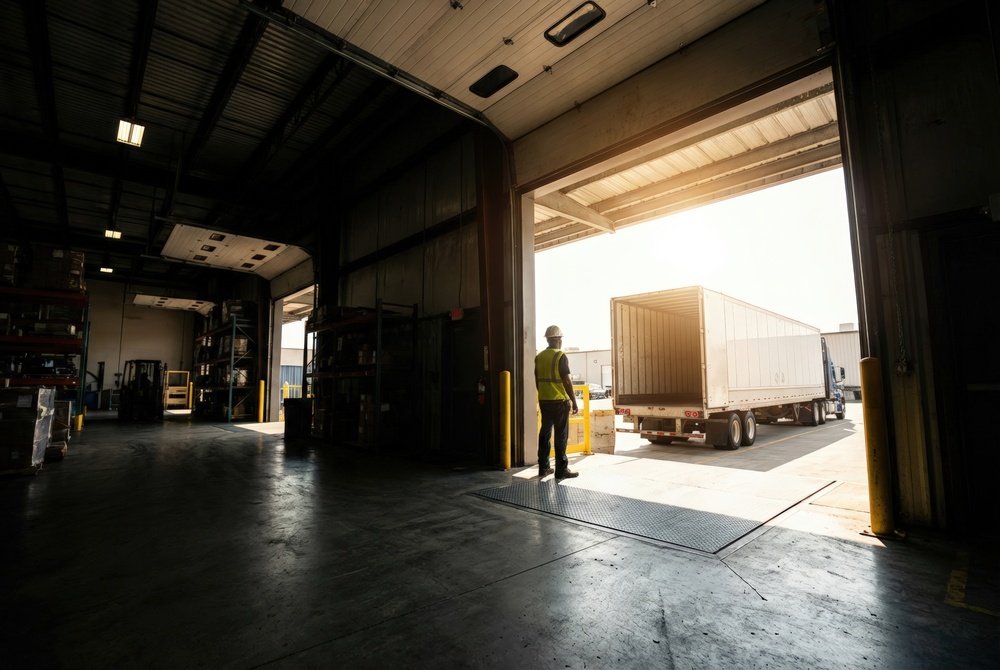
There is a more practical approach. Trailer storage functions as a release valve for overwhelmed distribution centers. Instead of paying a premium for indoor overflow space or letting demurrage charges accumulate at a terminal, you pull the freight and stage it in a professionally managed yard. It stays accessible, organized, and ready to roll into the warehouse when the operation is ready to receive it.
GFS Logistics uses secure yard space in Lancaster, TX, to provide exactly that kind of overflow capacity. For supply chain directors and procurement officers managing high-volume operations in the Dallas-Fort Worth area and nationally, it is one of the most cost-effective tools in a seasonal inventory strategy.
Why Outdoor Trailer Storage Is the Most Flexible 3PL Asset
When warehouse space runs short, the instinct is often to find more warehouse space. That solution is available, but the terms are usually unfavorable. Short-term industrial leases in active freight markets carry a premium. Landlords know that a shipper who needs space in October is not negotiating from a position of strength. Add the setup time, the moving cost, and the coordination of managing an off-site facility, and the real cost climbs fast.
Outdoor trailer storage works differently. Storage trailers provide portable, on-demand scalability, eliminating the long-term commitments and fixed costs associated with warehouse leases, while also offering flexibility for seasonal adjustments. You scale up when volume demands it and scale back when it does not. There is no 12-month minimum and no buildout timeline.
Trailers are nine to twelve times less expensive than fixed spaces. For a brand managing 60 to 90 days of elevated seasonal volume, that cost difference is not marginal. It is the difference between a manageable peak period and a quarter that erodes margin before the first holiday shipment goes out.
The drop-and-hook advantage adds another layer of efficiency. A driver brings an inbound trailer into the yard, drops it, and picks up an empty or outbound unit without waiting for a dock door to open. The freight stays sealed and secure in the trailer until the warehouse team is ready to process it. That flexibility is not available with a traditional warehouse receiving model, where inbound freight competes for dock time against outbound operations.
With trailers staged nearby, your team can load and unload on your own schedule instead of rushing to meet carrier deadlines. That means fewer hours spent coordinating pickups, less need for extra labor during peak times, and lower labor costs overall.
Solving the Port Congestion Problem with Semi-Trailer Storage
Port delays have become a recurring cost driver for importers. Containers arrive, customs clears, and then the freight sits at the terminal while the receiving warehouse works through its own backlog. Every day that container stays inside the terminal gates, the meter runs.
Demurrage and detention charges cost the global shipping industry an estimated $22 billion per year. These fees accumulate quickly, often $100 to $150 per container per day, and they compound with every delay in the supply chain, from port congestion to warehouse scheduling problems.
The math makes the case for semi-trailer storage quickly. A container sitting at a Houston terminal for five extra days at $150 per day generates $750 in penalty costs. A container sitting for ten days approaches or exceeds $1,500, and tiered pricing means fees often escalate the longer the container stays, with rates sometimes doubling after the first week. Those costs add up across multiple containers and multiple shipments in a single quarter.
The alternative is straightforward. Pull the container from the port or rail yard on a drayage move and transfer the freight into a semi-trailer at a nearby yard facility. The port fees stop. The freight is now in a controlled environment closer to the final distribution point. It can be unloaded into the warehouse on a scheduled basis, based on actual operational capacity rather than terminal deadlines.
Transloading at a 3PL near the gateway port is one of the most effective ways to avoid demurrage and detention charges while maintaining control of inbound freight. Lancaster, TX, sits within range of Port Houston and the regional rail network, making it a natural staging point for freight moving toward the interior of the country.
Security and Accessibility: What to Look for in a Storage Yard
Trailer storage only works as a professional logistics tool when the yard itself is operated to a professional standard. A secured, well-managed outdoor storage yard is not a parking lot. It is an extension of your distribution operation.
The security baseline matters. A credible storage yard runs 24/7 monitoring, a secured perimeter with controlled access, and digital logging of every trailer entering and exiting the facility. You should know exactly which unit arrived when, what it contains, and where it is positioned in the yard at any given moment.
Marked ground pads and real-time inventory systems speed retrieval and reduce confusion. Many operators use forklifts and other equipment to move assets directly from trucks to pads, streamlining logistics. A yard without that structure creates its own inefficiencies: trailers that are difficult to locate, freight that cannot be retrieved on short notice, and a loss of the accessibility advantage that makes trailer storage valuable in the first place.
GFS Logistics tracks yard inventory with the same discipline applied to warehouse shelving. A trailer in the yard carries the same visibility as a pallet in a rack position. Clients have access to the current status on what is staged, what is scheduled for inbound processing, and when specific units are available for departure. That inventory visibility is what separates a strategic trailer storage program from simply parking trailers somewhere off-site.
Trailers themselves are weather-sealed, enclosed units. The freight inside is protected from the elements, just as it would be during transit. Staging inventory in a trailer does not expose it to risk. It is maintaining the same protection level that applied the moment it left the manufacturer or port.
Integrating Trailer Storage into Your DFW Distribution Strategy
Lancaster’s location is not incidental to its value as a trailer storage hub. It sits at the intersection of I-20, I-35, and I-45, three of the most active freight corridors in the southern United States. Freight staged in Lancaster can reach Houston, San Antonio, Oklahoma City, and New Orleans without significant transit delays. It can move east toward Atlanta or north toward Kansas City with equal efficiency.
That geographic position makes Lancaster a strategic staging point between the ports and the rest of the country. Brands importing through Houston or Laredo can pull freight inland to Lancaster, hold it in trailer storage while the downstream demand picture develops, and then release it into the warehouse for final processing when the timing is right. That sequence gives operations managers a buffer that pure port-to-warehouse logistics does not.
The transition from yard to warehouse is straightforward. When trailer inventory is ready for processing, it moves directly to a dock door at the GFS facility. From there, freight can be inducted into the warehouse management system, sorted for final kitting or assembly, and moved through the fulfillment flow without additional handling steps. The yard and the warehouse function as a single connected operation, not as two separate facilities requiring separate coordination.
For retail supply chain directors managing seasonal surges, that integration changes the planning equation. Instead of locking warehouse floor space in place weeks before a peak period, you can stage incoming freight in the yard and release it in controlled waves as shelf space opens. Inbound doesn’t compete with outbound. The dock stays functional. And the warehouse operates at the throughput it was built for, rather than the excess capacity a Q4 surge would otherwise demand.
Building Peak-Season Resilience Before You Need It With GFS Logistics
The brands that handle seasonal surges best are the ones that put overflow capacity in place before volume arrives. Reactive solutions, signed under pressure, cost more and deliver less.
This kind of flexibility supports industries that operate on fluctuating schedules, tight delivery windows, or cyclical demand, where the ability to scale up or down without major friction is critical.
For logistics managers who have absorbed the cost of one too many peak-season scrambles, trailer storage is worth evaluating before the calendar forces the conversation.
GFS Logistics provides secure outdoor trailer storage, drop-and-hook yard access, and full inventory visibility at our Lancaster, TX site. Whether you are managing import freight from Houston, staging seasonal overflow, or building a regional distribution buffer for the southern United States, the infrastructure is in place and ready to scale with your operation.
Contact us today to learn more about our storage options.