
Every October, the same pattern repeats. A brand realizes its warehouse space is nearly full. Its 3PL is quoting waitlists instead of dock dates. Carrier rates have jumped, and the short-term lease options left on the market carry a heavy premium. The season that was supposed to be the biggest revenue quarter of the year starts with a scramble instead of a plan.
This is the Q4 bottleneck trap, and it is almost always avoidable. Most qualified 3PLs allocate peak season warehouse space by September, which means conversations need to start months in advance. By the time October arrives, the good capacity is already spoken for.
Seasonal inventory management is the practice of proactively balancing indoor warehouse space with yard overflow capacity to handle predictable demand spikes before they hit. It is not a reactive fire drill in Q4. It is a plan built in Q2 and Q3, with the physical infrastructure already reserved before volume climbs.
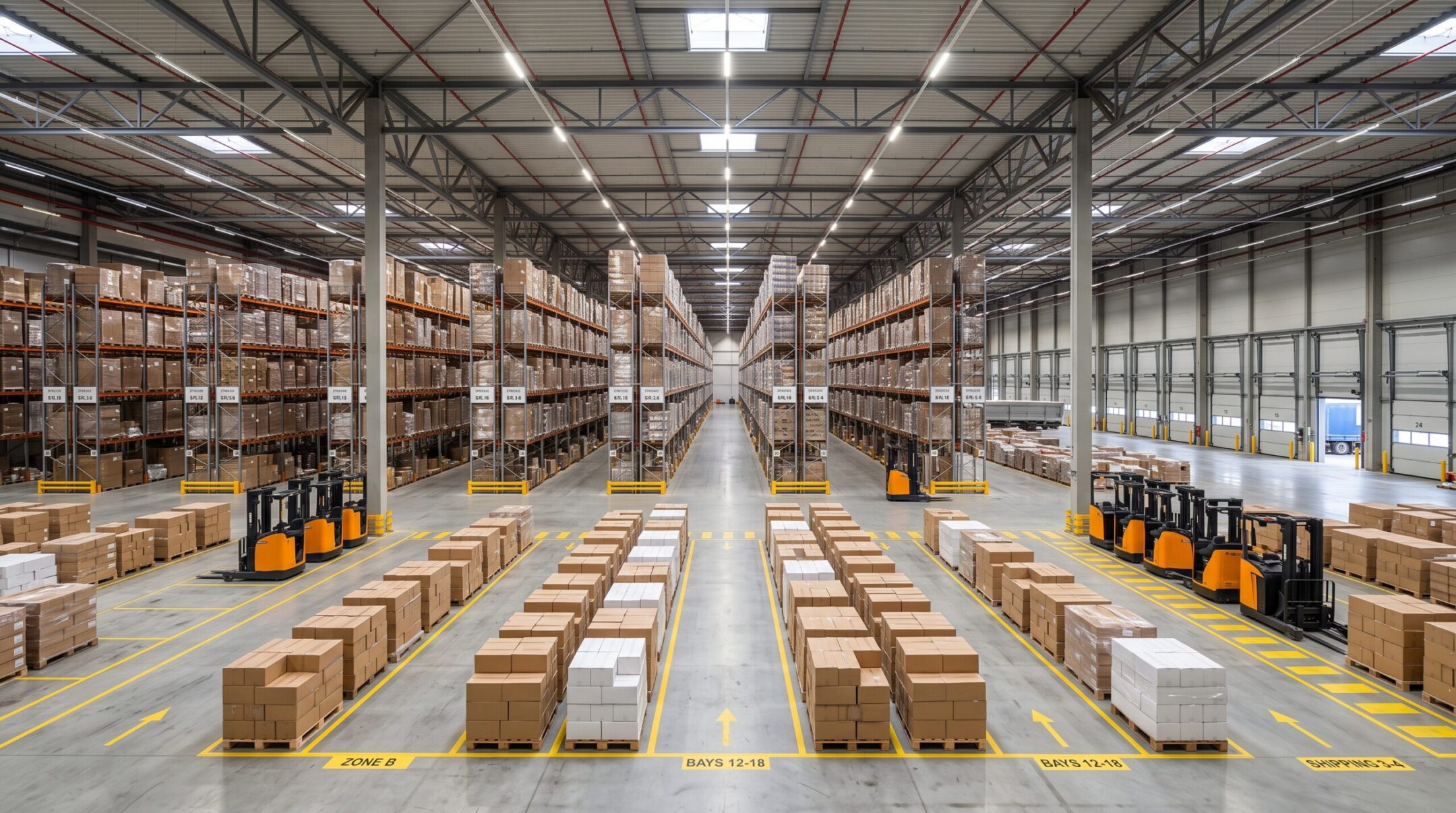
GFS Logistics runs this exact model out of our Lancaster, TX facility. Over 1.6 million square feet of warehouse space, paired with drop-and-hook trailer storage, gives clients the flexibility to scale into Q4 without a last-minute space search. That kind of preparation is what separates a smooth peak season from an expensive one.
Why Waiting Until September Is Too Late
The Real Deadline Sits in Summer, Not Fall
Most brands assume Q4 planning starts in Q4. It doesn’t. A supplier lead time of six to eight weeks alone can push the real planning window back to early summer for anything manufactured overseas. Work backward from your target in-stock date, add production time, add ocean or domestic transit time, and add the fulfillment center’s inbound receiving window. That math almost always lands on a deadline in August or early September, not October.
Real-time visibility into inbound freight, both ocean and domestic, matters here more than at any other point in the year. A brand that can see exactly when containers will land, and how that timing lines up with warehouse capacity, can plan around it. A brand working from guesswork discovers the mismatch only after freight is already delayed and shelf space is already gone.
Reactive Planning Gets Expensive Fast
Waiting until autumn to secure space creates a chain reaction of costly decisions. Short-term warehouse leases signed under pressure carry premium rates, because landlords know a shipper scrambling for space in September has little leverage. Containers held at port because the warehouse cannot yet receive them start accumulating demurrage fees, often $100 to $150 per day and climbing in tiers the longer they sit.
Mispicks and shipping delays climb too. A warehouse team suddenly hit with a volume surge, without the staging and slotting adjustments that should have happened weeks earlier, is more likely to make errors during exactly the period when customers expect flawless execution. The cost of human error compounds during a surge in a way it never does during a normal week.
Inventory Velocity Depends on Early Positioning
Products move at different speeds, and that speed shifts seasonally. A SKU that was a slow mover in July can become your top seller in November. Early planning gives your team the runway to reposition inventory ahead of that shift, placing high-velocity holiday SKUs where they are fastest to pick before the surge begins. Waiting until the surge is already underway means making that adjustment in the middle of your busiest weeks, when there is no time to do it carefully.
Strategic Seasonal Inventory Management: Balancing Floor Space and Yard Overflow
Trailer Storage as a Release Valve
The core of a strong seasonal inventory management plan is flexibility. Warehouse floor space is fixed. Demand is not. Trailer storage bridges that gap by giving your operation a place to stage inbound freight before the warehouse floor is ready to receive it.
Wave picking principles apply just as well to staging as they do to order fulfillment. Inventory sits in the yard, organized and accessible, until a dock door opens and a wave of staged freight rolls in on demand. That structure keeps the warehouse floor from becoming overloaded early in the season while still keeping product close enough to move fast once it is needed.
Drop-and-Hook Triggers Keep Fast Movers Flowing
Automated replenishment is not just an in-warehouse concept. Applied to yard management, it means setting clear triggers for when staged trailers move from the yard to the dock. Fast-moving seasonal SKUs get pulled first and moved through processing quickly. Slower movers stay staged longer, freeing up warehouse floor space for what actually needs to be picked and shipped that week.
This kind of triggered flow prevents two common Q4 failures: warehouse floors overloaded with product that will not sell for another three weeks, and popular items stuck in yard storage while a picker searches for stock that should already be on the floor.
Why Integration Cannot Be an Afterthought
Seasonal inventory management software has to talk to your sales channels and your ERP in real time. If your Shopify or Amazon storefront is not reflecting live inventory positions during a surge, you are one order away from overselling a product that is technically in your network but not yet processed into sellable stock.
That kind of disconnect is common during Q4 specifically because volume is unpredictable and systems that work fine at normal volume can lag under peak load. Confirming that your 3PL’s technology stack handles real-time updates, not batch updates, should be part of every peak season readiness conversation held well before October.
The Hidden Benefits: Labor Optimization and Space Management
Guided Workflows Shorten the Seasonal Learning Curve
Every Q4 brings temporary staff into the warehouse. Recruiting should begin no later than August, with staggered onboarding through September and October to protect core team productivity. Even with early hiring, new seasonal staff need a way to ramp up quickly without dragging down accuracy.
A proactive 3PL partner uses guided WMS workflows to shorten that learning curve. Instead of relying on memory or shadowing an experienced picker, new staff follow step-by-step direction through the system itself. Accuracy holds steady even as headcount grows fast, which matters most in the exact weeks when errors are most costly.
Slotting Optimization Ahead of the Surge
Warehouse layout should not be static year-round. Slotting optimization uses demand data to reorganize the floor ahead of seasonal shifts, moving high-velocity holiday SKUs closer to pick faces and pushing slower stock to secondary storage. That adjustment, made in August or September, pays off through every week of the peak.
Done reactively, in the middle of a volume spike, the same adjustment becomes disruptive rather than helpful. Slotting changes need calm conditions to execute cleanly. Q4 chaos is the wrong time to be moving pallets around.
Scaling with GFS: Technology as a Service
Avoiding the Cost of Standalone Short-Term Space
Small and mid-sized brands facing a seasonal volume spike often consider a standalone short-term lease as their overflow solution. That path comes with real drawbacks: a new vendor relationship to manage, upfront costs, and a facility with none of the systems integration your primary warehouse already has.
Leveraging an existing 3PL’s infrastructure avoids that cost entirely. GFS Logistics clients scale into available warehouse and yard capacity that is already integrated with the same WMS, the same reporting dashboard, and the same team managing their year-round fulfillment. There is no new system to learn and no new facility to coordinate during the busiest quarter of the year.
A Tech-Enabled Facility Built for the Surge
GFS Logistics’ Lancaster facility is built for exactly this kind of scaling. High-volume fulfillment infrastructure, positioned within the major DFW freight corridors, combined with drop-and-hook trailer storage on-site, gives brands the capacity to go from 100 orders a day to 10,000 without renegotiating a new contract or relocating operations. The same 24/7 client portal that tracks inventory in July tracks it in November, giving operations directors continuous visibility straight through peak.
That continuity is the real value of planning early with an established 3PL. Q4 is not a separate operation bolted onto the rest of the year. It is a scaled version of the same system, running on infrastructure that was already built to handle it.
Decide Your Q4 on Schedule with GFS Logistics
Peak season rewards preparation and punishes procrastination. The brands that capture the most revenue during Q4 are the ones that locked in inventory, confirmed fulfillment capacity, and settled their space plan months before Black Friday, not the week before.
If your seasonal inventory management strategy is still an open question in September, the leverage you had in June is already gone. Warehouse space tightens, carrier rates climb, and the flexible overflow options that were available months earlier start disappearing.
GFS Logistics gives e-commerce brands, warehouse managers, and operations directors a way to lock in that capacity now. With 1.6 million square feet of warehouse space, secure drop-and-hook trailer storage, and a Lancaster location built into the center of the DFW freight network, the infrastructure to handle your Q4 surge is already in place. The only question is whether your plan reserves it before the rest of the market does. Contact us today!