
There is a specific kind of dread that comes with watching a container sit at port. The vessel has arrived. Customs has cleared. But the warehouse is not ready to receive it, the drayage truck is booked three days out, or the dock schedule is already full. Every day that container stays inside the terminal gates, the invoice grows.
This is the breaking point for import operations. Container backlogs at Gulf ports and inland rail yards translate directly into daily penalty fees that erode margin before the product ever reaches a shelf. Demurrage and detention charges cost the global shipping industry an estimated $22 billion per year. Those charges accumulate fast, often $100 to $150 per container per day, and they compound with every delay in the chain, from port congestion to warehouse scheduling gaps.
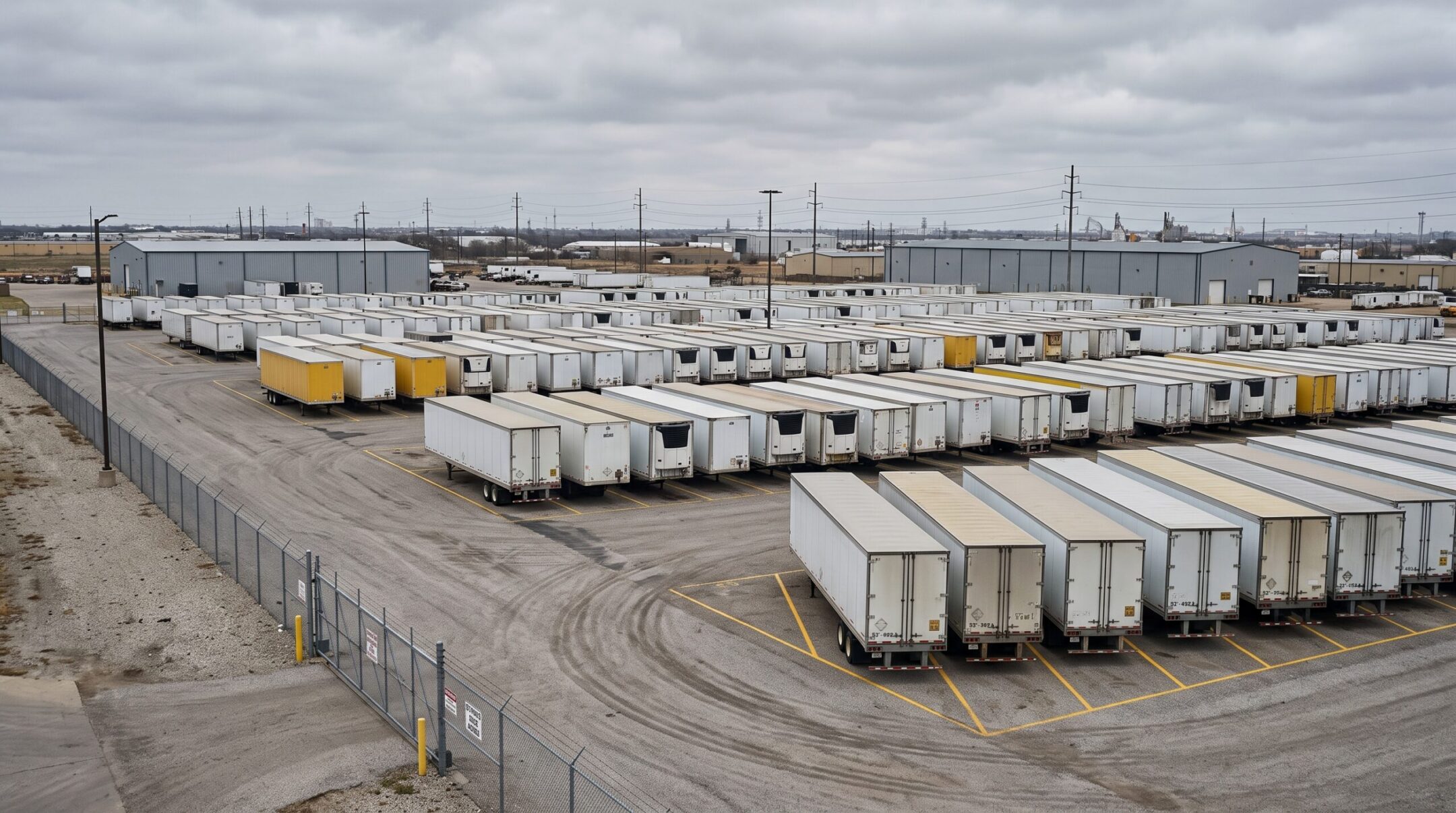
Semi-trailer storage and yard staging offer a direct way out of that trap. The strategy is straightforward. Pull the container off the port or rail yard on schedule, transfer the freight into a trailer at a secure regional yard, and stop the terminal clock immediately. The freight is safe, the fees are gone, and the warehouse receives the goods on its own schedule instead of the port’s.
GFS Logistics operates a secure yard in Lancaster, TX, built for exactly this purpose. Combined with coordinated drayage routing, it gives importers a way to decouple port release deadlines from warehouse receiving schedules. That separation is often the difference between a controlled cost and a runaway one.
Why Port Congestion Eats Import Margins
The Clock Starts the Moment the Container Is Discharged
Most importers understand the concept of demurrage in general terms. Far fewer track it with the precision it demands. Demurrage is a fee charged by a marine terminal or ocean carrier when an import container remains at the terminal longer than its allotted free time. Free time typically runs three to seven days, depending on the carrier, the port, and the contract terms. Once that window closes, the daily charges begin and do not stop until the container leaves the terminal.
The rates are not flat. They escalate in tiers. A container sitting a few days past free time might accrue at $100 to $150 per day. Push past a week, and the daily rate can climb past $300, with some terminals reaching $400 or more during periods of severe congestion. An eight-day overstay can accumulate more than $1,100 in charges through progressively higher rate tiers. Multiply that across a fleet of containers moving through a busy import season, and the number stops looking like a rounding error on a freight invoice.
Reactive Scheduling Is the Root Cause
The fees rarely start with a single dramatic failure. They start with routine scheduling friction. A drayage truck is not available the day the container clears customs. The warehouse dock is booked solid for inbound appointments.
Each of these is a normal operational constraint. Together, they create a container sitting exactly where it costs the most money to sit.
Waiting until a container is available before arranging transportation can quickly reduce the amount of free time remaining. Once that reactive pattern sets in, it repeats with the next shipment and the one after that. Importers relying on a purely warehouse-to-port pipeline, with no buffer in between, are structurally exposed to this cost every time port conditions tighten.
The Downstream Cost of Disrupted Inventory Velocity
Port delays do not stay contained at the port. A container held up in Houston pushes back replenishment timing at the distribution center. That delay cascades into stockouts, missed retail delivery windows, and rushed transportation decisions made under pressure rather than according to plan. Inventory velocity, the pace at which product moves from receiving to available stock, depends on predictable inbound timing. When port congestion disrupts that timing, the entire downstream schedule absorbs the shock.
Strategic Outdoor Trailer Storage: Decoupling Port Deadlines from Dock Doors
The Drop-and-Hook Advantage
The fix is a change in sequencing. Instead of waiting for a dock door to open before pulling a container, the freight moves from the port or rail yard directly into a semi-trailer at a regional staging facility. The port fees stop the moment the container clears the gate. The freight is no longer the terminal’s problem to store. It is yours, in a location built to hold it safely and affordably.
This is the core of a drop-and-hook strategy. A driver delivers the loaded trailer to the yard, drops it, and picks up an empty or outbound unit without waiting on warehouse processing. The freight stays secure and sealed until your team is ready to bring it into the facility. That single sequencing change is often what stands between a manageable import cost and an invoice nobody budgeted for.
Controlled Yard-to-Warehouse Flow
Staging freight in the yard is only useful if the transition into the warehouse is organized. A well-run yard staging program sets clear triggers for when trailers move from the yard to a dock door, based on actual warehouse capacity rather than port pressure. That means receiving happens at a pace your team can process accurately, instead of a pace dictated by how fast a terminal wants the space back.
This structure gives operations teams a genuine planning advantage. Inbound freight arrives at the yard on schedule. It moves into the warehouse in controlled waves, tied to actual dock availability and staffing. The result is a receiving process that runs at your operational tempo, not the port’s.
Why Integration and Visibility Matter
None of this works without accurate tracking. A yard full of trailers is only a solution if you know exactly which trailer holds which freight, and exactly when it is scheduled to move into the warehouse. Yard management tracking has to talk to your warehouse management system, ERP, and transportation systems. Without that connection, you have simply moved the visibility gap from the port to your own yard.
A properly integrated system gives your team a live view of every staged trailer: contents, arrival date, and scheduled processing window. That level of tracking is what separates strategic yard staging from freight that is technically off the port meter but still operationally out of sight.
The Hidden Benefits: Yard Security and Regional Transit Optimization
Security Standards That Match Warehouse Discipline
Staging freight outdoors does not mean staging it carelessly. A professional-grade yard operates with the same discipline applied to warehouse shelving. That means 24/7 perimeter monitoring, controlled gate access, and digital logging of every trailer entering or leaving the facility. Marked ground pads keep trailers organized and easy to locate, which speeds retrieval when a unit is scheduled for processing.
Trailers themselves are weather-sealed, enclosed units. Freight staged in a trailer sits in the same protective environment it traveled in from the port. Staging is not exposure. It is a controlled extension of the same supply chain discipline that governs the warehouse floor.
Lancaster’s Position Between the Port and the Interior
Location determines whether a staging strategy actually saves transit time or just adds another stop. Lancaster, TX sits at the intersection of I-20, I-35, and I-45, placing it directly along the corridor connecting Port Houston to inland Texas markets and beyond. Freight staged in Lancaster can move on to Dallas-Fort Worth, Oklahoma City, San Antonio, or further national distribution points without a detour.
That geography turns a defensive cost-avoidance tactic into a genuine transit optimization tool. Freight is not just parked to avoid fees. It is positioned exactly where it needs to be for the next leg of distribution, which shortens the path from port clearance to final delivery.
Scaling with GFS: Technology as a Service
No Fixed Real Estate Commitment Required
Importers facing recurring port congestion often consider a long-term industrial lease as a buffer solution. That approach carries real drawbacks: multi-year commitments, high fixed costs, and capacity that sits unused outside of peak import periods. A fixed lease solves the space problem but creates a new fixed-cost problem in its place.
Flexible outdoor trailer storage avoids that trade-off. Capacity scales up during a heavy import cycle and scales back down when volume normalizes, without the long-term obligation of an industrial lease. For procurement and logistics teams managing variable import schedules, that flexibility is often more valuable than the space itself.
What GFS Provides
GFS Logistics operates a secure yard in Lancaster with drop-and-hook access, enterprise WMS integration, and rapid distribution capability across the Dallas-Fort Worth region. Clients get a staging solution that connects directly to warehouse operations, rather than a disconnected storage lot that creates its own coordination problems.
Combined with over 1.6 million square feet of warehouse and fulfillment space at the same Lancaster location, the yard functions as an extension of the facility rather than a separate operation. Freight moves from port to yard to warehouse dock as one coordinated flow, tracked the entire way.
Protecting Margin Before the Fees Start
Demurrage and detention charges are one of the most avoidable costs in modern import logistics, yet they remain one of the most common.
For import-heavy operations working through Gulf Coast ports, a Lancaster staging strategy converts an unpredictable cost center into a managed, scalable part of the supply chain. GFS Logistics provides the yard, the drayage coordination, and the warehouse integration to make that shift practical for procurement managers and logistics directors handling real import volume today.